
New York
Trump’s 100% Tariff Shock on China: $600B Trade Blow and Its Ripple Effect on US & Indian Markets
🧾 Quick Market Summary (as of October 11, 2025)
| Index / Commodity | Latest Level | Change (1W) | Market Sentiment |
|---|---|---|---|
| Nifty 50 (India) | 23,250 | ▲ +3.0% | Bullish |
| Sensex (India) | 76,800 | ▲ +2.8% | Bullish |
| S&P 500 (US) | 4,940 | ▼ -1.9% | Bearish |
| Nasdaq Composite | 15,050 | ▼ -2.3% | Weak |
| Shanghai Composite | 2,890 | ▼ -1.5% | Negative |
| Brent Crude Oil | $68.40/barrel | ▼ -24% (YoY) | Deflationary for India |
| USD/INR Exchange Rate | ₹82.3 | Stable | Neutral |
| Gold (Spot) | $2,430/oz | ▲ +1.8% | Safe-haven demand rising |
1. Trump’s Tariff Bombshell: 100% Duties Imposed on China
-
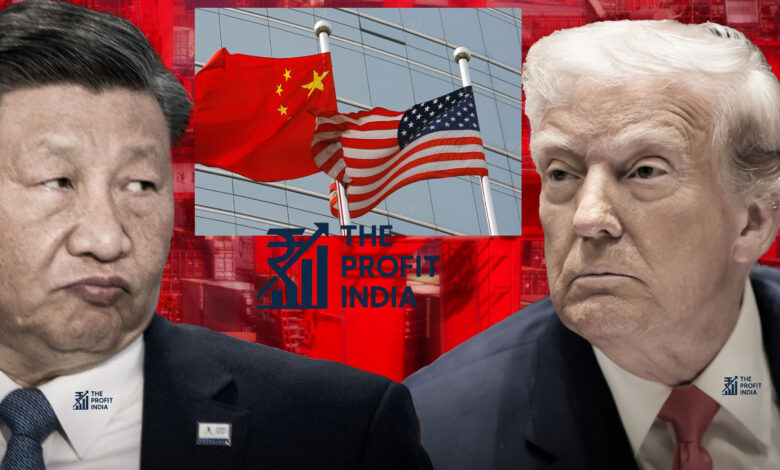
US President Donald Trump announced an additional 100% tariff on Chinese imports.
-
Effective November 1, 2025, or earlier.
-
Adds to the existing 30% duties, bringing the total effective tariff to 130%.
-
Export controls also imposed on “any and all critical software” from US tech firms.
-
The move follows China’s curbs on rare earth exports, crucial for semiconductors and defense.
📉 Estimated Impact: Over $600 billion in Chinese exports could be hit.
2. Economic Fallout: Global Growth at Risk
2.1. Renewed Trade War Concerns
-
Escalation may reignite a 2018-style trade war, reducing global trade volume by 1–2%.
-
Global GDP could slow by 0.3–0.5% if prolonged.
-
Equity markets worldwide are expected to face short-term corrections.
2.2. Inflation Worries for the US
-
Higher import prices → inflationary pressure for US consumers.
-
The US Federal Reserve faces a policy dilemma: control inflation vs. protect growth.
💬 “This latest action runs the risk of reigniting the trade war which Trump started in April,” — VK Vijayakumar, Chief Investment Strategist, Geojit Financial Services
3. Expert Insights: US and Global Market Reaction
| Expert | Designation | Key View |
|---|---|---|
| VK Vijayakumar | Chief Investment Strategist, Geojit Financial Services | “100% tariffs could trigger a short-term global market correction.” |
| G. Chokkalingam | Founder, Equinomics Research | “Global markets will remain weak; both US and China to see slower growth and inflation pressure.” |
3.1. Key Financial Risks
-
US Inflation: May rise 0.7–1.2 percentage points.
-
GDP Growth: Could dip below 1.5% in Q1 2026.
-
Market Impact: S&P 500 and Nasdaq may correct by 3–5% short term.
-
Stagflation Risk: Increasing, as growth slows while prices rise.
4. India in Focus: Tariffs and Trade Diplomacy
4.1. Tariff Impact on Indian Exports
-
Trump has imposed a 50% tariff on Indian goods entering the US.
-
Despite this, trade negotiations continue positively between both countries.
-
PM Narendra Modi and Trump recently discussed progress on bilateral trade talks.
4.2. Market Sentiment
-
India’s direct exposure is limited, but market sentiment could weaken short-term.
-
India remains a US strategic partner, making prolonged tariff aggression unlikely.
-
FPIs may divert flows from China to India, enhancing domestic equity resilience.
💬 “India could largely escape the global weakness if the US doesn’t extend aggression towards Indian exports,” — G. Chokkalingam, Equinomics Research
5. Crude Oil Crash: A Hidden Boon for India
-
Crude oil prices plunged 24% from their 52-week highs post-tariff news.
-
Lower oil prices will reduce India’s import bill and ease inflation.
-
Benefits include:
-
✅ Lower CPI inflation
-
✅ Stronger rupee
-
✅ Improved forex reserves
-
✅ Higher corporate margins
-
Sectors That Stand to Gain
| Sector | Impact from Falling Oil |
|---|---|
| Paints & Chemicals | Improved margins |
| Aviation | Lower ATF costs |
| Logistics | Reduced freight expenses |
| FMCG | Input cost savings |
6. Indian Markets: Resilient Despite Global Weakness
| Indicator | Value (Oct 2025) | Trend / Impact |
|---|---|---|
| Nifty 50 Index | +3% MoM | Bullish |
| Crude Oil Prices | Down 24% YoY | Inflation relief |
| FPI Inflows | Rising | Positive |
| USD/INR | ₹82.3 | Stable |
| India GDP Forecast (FY26) | 6.8% | Strong domestic momentum |
-
Nifty 50 and Sensex continue upward momentum, supported by earnings recovery.
-
Analysts expect a new market high if an India–US trade pact materializes in Q4 2025.
7. Key Takeaways for Investors
| Region | Impact | Sentiment | Outlook |
|---|---|---|---|
| US | Inflation ↑, GDP ↓ | Bearish | Short-term correction |
| China | Export slowdown | Bearish | Weak |
| India | Oil windfall, stable trade | Neutral–Bullish | Resilient |
-
Short-Term: Expect global equity volatility.
-
Medium-Term: India may benefit from trade realignment.
-
Long-Term: Global outlook hinges on US-China negotiations and Fed’s rate path.
8. The Profit India Financial Snapshot
| Factor | US | China | India |
|---|---|---|---|
| Tariff Rate | +100% | — | +50% |
| GDP Growth (2025–26) | ↓ to 1.5% | ↓ to 4.2% | ↑ to 6.8% |
| Inflation Trend | ↑ 4.8% → 5.5% | ↑ 2.1% → 2.7% | ↓ 5.1% → 4.6% |
| Stock Market Trend | -3% to -5% | -4% | +2% to +4% |
| Investor Flow | Outflows from risk assets | Outflows | Inflows (FPI-driven) |
9. The Profit India View
Trump’s 100% tariff escalation risks unsettling global trade, but it could redirect capital flows towards emerging markets like India.
With oil prices falling, macroeconomic stability improving, and earnings momentum building, India remains the relative outperformer in a volatile global backdrop.
You will like these articles as well…
-
Read More: Forbes India 2025: $1T Wealth, 3 New Billionaires, 6 Points
-
Read More: FY25 India Inc Revenue Growth at 12.7%, Profits Triple GDP Growth
-
Read More: Prices of EVs, Wind Turbines, and Semiconductors to Rise Amid Fresh Tariffs on China
-
Read More: Jefferies’ 25 Bottom-Up Stock Picks for 2025: Key Market Context and Macro Drivers
-
Read More: Anthropic Bets on Pure AI Play, Challenges $850B Rival Expansions
📄 Disclaimer — The Profit India
This article is intended for informational and analytical purposes only. It should not be construed as financial or investment advice. All data and projections are based on publicly available sources and expert commentary as of October 2025. Readers are encouraged to consult certified financial advisors before making investment decisions.